
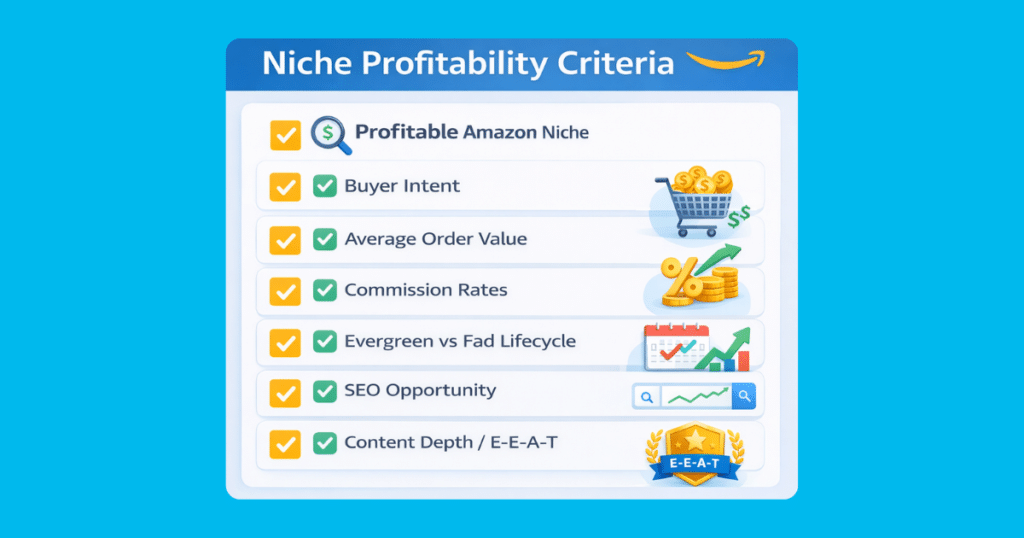
Picking an affiliate niche based on interest alone is a reasonable starting point. Building a business on it without validating the data is a gamble. The affiliates who consistently earn more are those that confirm audience demand, identify high-intent product clusters, and test retailer performance before doubling down on content.
This guide covers a repeatable framework for validating Amazon affiliate niche ideas using real click data, a list of ten evergreen niches with strong multi-retailer potential, and how to use Geniuslink’s link management tools and Choice Pages to test demand and shift traffic toward your highest-earning destinations.
Why Validation Matters Before You Write
Most affiliate content is created speculatively: pick a topic, write reviews, and wait to see what converts. The problem with this approach is that it treats content creation as the experiment, which is expensive in both time and effort.
A data-first approach inverts that. You identify signals of genuine purchase intent before writing, use analytics to confirm which product clusters and geographies are actually engaged, and use A/B split testing to let performance data guide content investment. The content you create is informed rather than exploratory.
Three factors make validation especially important now. First, Amazon accounts for roughly 40% of US e-commerce, so a meaningful share of your audience prefers to purchase from other retailers. A strategy that treats every visitor as an Amazon buyer leaves revenue on the table. Second, Amazon commission rates have been reduced multiple times over the past decade, narrowing the margin for error with low-converting content. Third, research shows that approximately 78% of online shoppers compare prices before purchasing. Affiliates who surface that comparison on their own pages, rather than sending readers to Google, capture a conversion that would otherwise be lost.
The Validation Framework
Step 1: Identify Search Demand and Buyer Intent
Start with Google Keyword Planner and Google Trends to map search volume and trend direction. The key distinction is between informational searches and buyer-intent searches. A reader typing “how does a pellet grill work” is learning. A reader typing “best pellet grill under $500” is shopping. Build your content roadmap around buyer-intent keywords: “best [product] for [use case],” “[product] vs [product],” and “[product] buying guide” all indicate a reader closer to a purchase decision.
Evergreen keywords, those that maintain steady search volume throughout the year rather than spiking seasonally, form the most durable foundation. A niche built around consistent purchase behavior earns commissions every month, not just in Q4 or around a single annual event.
Step 2: Segment Click Analytics by Geography and Device
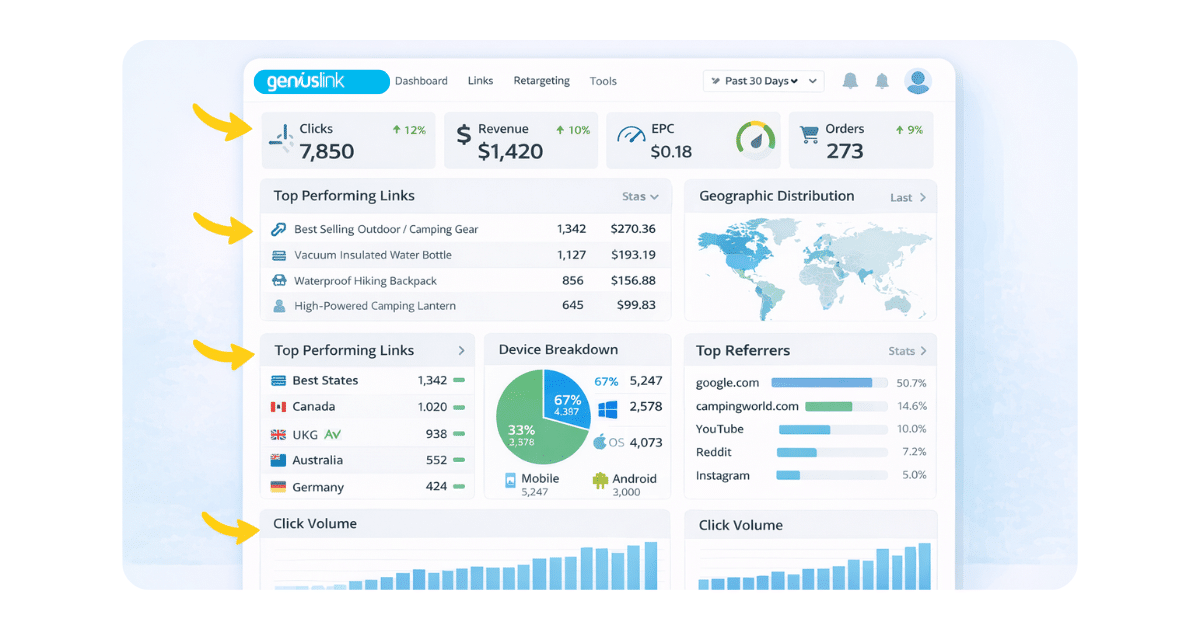
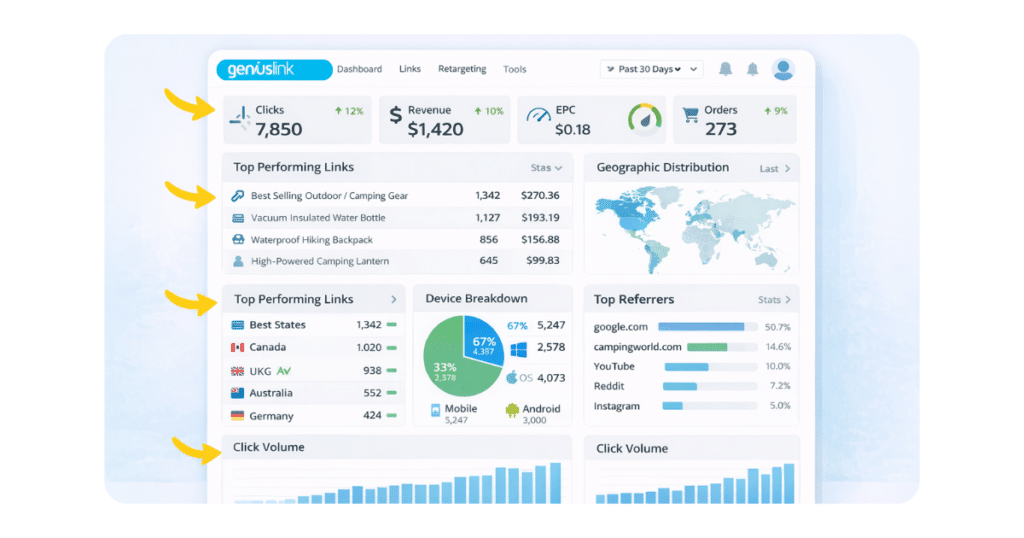
This is where Geniuslink becomes a research tool, not just a link tool. Its analytics dashboard breaks down every click by country, region, device type, referral source, and more. That granularity reveals audience patterns that aggregate traffic data completely obscures.
For example, if your analytics show that a significant share of clicks on outdoor gear content originates from mobile users in specific regions, that tells you two things: first, that mobile-optimized checkout is critical for that content; second, that geo-targeted product recommendations for those regions could improve conversion. Without that segmentation, you would never know to look.
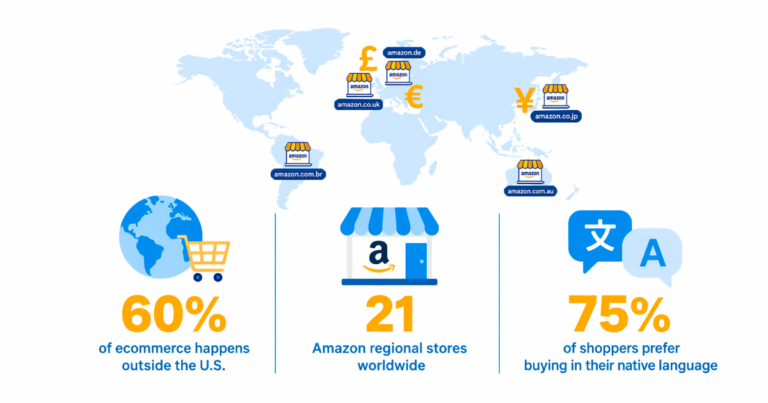
Geographic data also tells you which regional Amazon programs to prioritize joining. Geniuslink’s data shows that for every 10% of international traffic you receive, localizing your links can increase total revenue by around 5%. Identifying which countries are sending meaningful traffic is the first step to capturing those commissions.
Step 3: Identify Content Gaps in Your Niche
Analyze the top-ranking pages for your target keywords and look for what they are not covering. Specific use cases, audience constraints, and product comparisons that address real objections tend to be underserved. A niche dominated by generic roundups often has room for sub-niche content targeting narrower audiences with higher purchase intent.
Reader comments and questions about competitor content are among the most reliable sources of content gap intelligence. Questions that appear repeatedly in comment sections represent information buyers want and cannot currently find, which is exactly where useful affiliate content lives.
Step 4: Estimate Earnings Potential Before Committing
Before investing heavily in a niche, estimate realistic earnings per click (EPC) based on product price points, commission rates, and expected conversion rates for that product category. Higher-priced products with accessories that add to cart size generate more commission per sale. A reader who buys a pellet grill may also add pellets, a cover, and a wireless thermometer, which means your single referral earned commission on a larger basket.
Geniuslink’s analytics help track EPC patterns across product categories once links are running, giving you real data to guide future content decisions rather than projections.
The Multi-Retailer Advantage
Because Amazon holds approximately 40% of the US e-commerce market, a meaningful portion of your audience prefers a retailer other than Amazon. Some shoppers use Walmart for local pickup. Others trust Best Buy for electronics. Target’s RedCard loyalty program keeps many shoppers in that ecosystem. Forcing all of them through a single Amazon link means some will leave your page to find their preferred option elsewhere, and they may not come back through your link.
Geniuslink’s Choice Pages address this directly. A Choice Page presents the same product across multiple retailers in a single destination, letting each visitor select their preferred store. You earn a commission on qualifying purchases regardless of which retailer they choose. Google’s Product Review Guidelines also explicitly recommend including links to multiple sellers to give readers the option to purchase from their preferred retailer, which makes this approach aligned with both conversion and search quality signals.
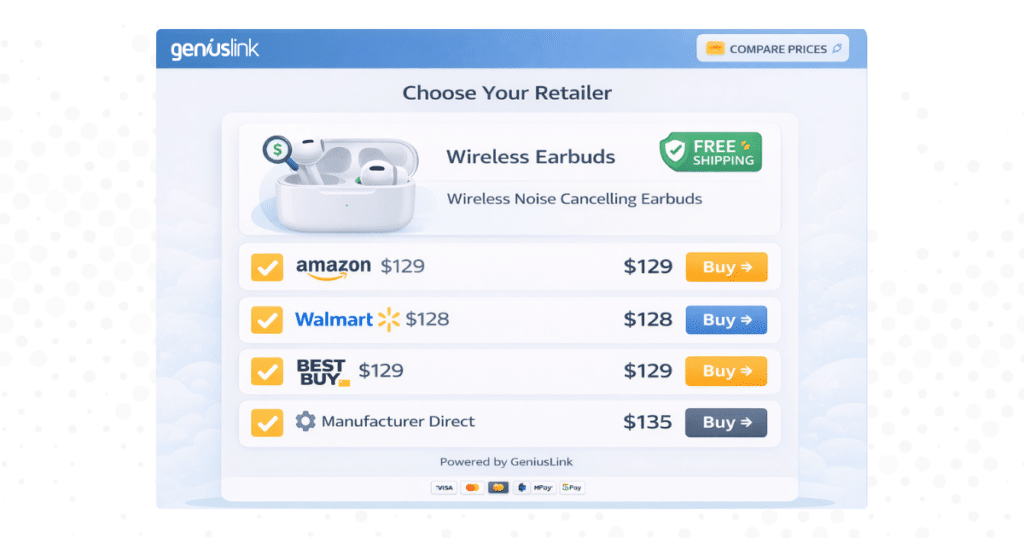
Multi-retailer linking also provides stock-out protection. When a product goes out of stock on Amazon, a single retailer’s link earns nothing. A Choice Page automatically routes shoppers to an in-stock alternative, maintaining conversion flow even when one retailer’s inventory is temporarily unavailable.
Ten Evergreen Amazon Affiliate Niches with Multi-Retailer Potential
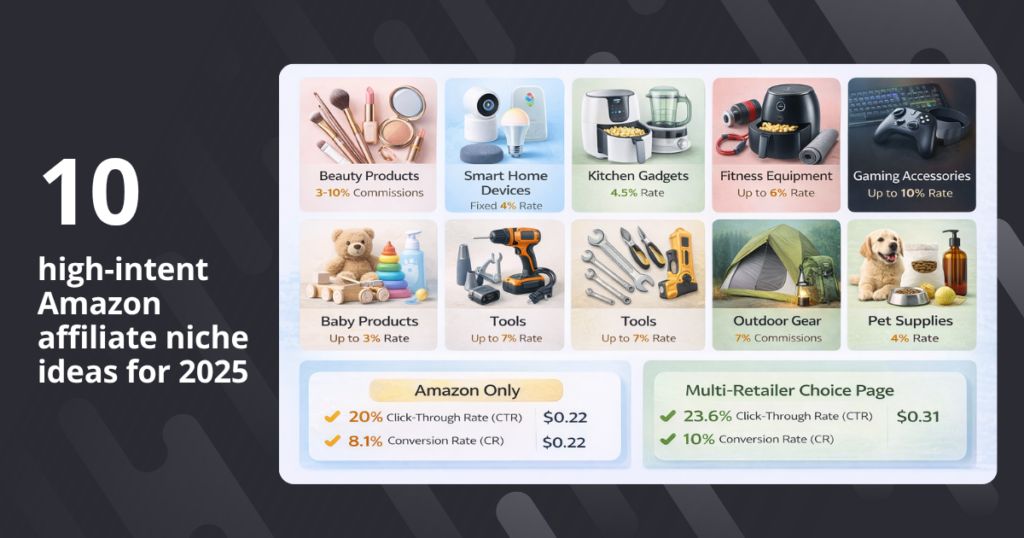
The niches below combine consistent buyer-intent search demand, strong product variety to sustain content creation, and meaningful opportunities across multiple retailers beyond Amazon.
1. Smart Home Upgrades and Voice Assistants
Smart speakers, connected lighting, Wi-Fi thermostats, and compatible accessories appeal to both tech-forward buyers and mainstream homeowners seeking convenience. The real earning opportunity lies in the accessory halo: a reader who purchases a smart speaker often adds smart plugs, bulbs, and sensors in the same session. Comparison content targeting specific use cases, such as smart home setups for renters or apartment-friendly configurations, faces less competition than broad device roundups. Choice Pages work well here because retailers like Best Buy and Target often run competitive promotions on smart home devices.
2. Portable Power Stations and Solar Generators
Rising energy costs and weather-related power disruptions have made portable power stations a practical purchase for a wide range of buyers: remote workers, RV travelers, outdoor enthusiasts, and households building emergency preparedness kits. These are high-consideration purchases in the $300 to $2,000 range, which means buyers research extensively before committing. Detailed comparison content is highly valuable in this niche. Multi-retailer options matter because shoppers in this category frequently wait for price drops across multiple stores before making a purchase.
3. Pet Tech and Specialty Consumables
Pet owners consistently spend and frequently repeat-purchase. Automatic feeders, GPS trackers, and smart litter boxes command premium prices, while specialty food, supplements, and grooming supplies generate recurring commission opportunities from a single engaged reader. Long-tail content targeting specific pet problems, such as cat feeders for those who eat too quickly or GPS trackers for high-escape-risk dogs, attracts buyers with urgent, specific needs and less-competitive search environments.
4. Home Fitness Accessories and Recovery Tools
While large equipment purchases have normalized, accessories and recovery tools maintain steady, year-round demand. Resistance bands, massage guns, foam rollers, and compact training gear suit small spaces and a variety of budgets. Products in this category often sell in sets or bundles, which increases average order value. Sporting goods retailers frequently run promotions that beat Amazon on fitness gear, making Choice Pages a natural fit.
5. Baby Mobility and Safety Gear
New parents research extensively before purchasing safety-related items, which makes detailed, trustworthy review content particularly valuable in this niche. Travel strollers, convertible car seats, and baby monitors are high-ticket items with high comparison shopping behavior. Many parents also prefer specialized baby retailers or use store-specific registry perks, which makes multi-retailer options genuinely useful rather than cosmetic.
6. DIY Home Repair Power Tools
Cordless drills, oscillating multi-tools, and compact power tools serve a large audience of homeowners tackling their own repairs and improvements. Project-specific content, such as the essential tools for a bathroom renovation or furniture restoration, naturally incorporates multiple product recommendations. Home improvement retailers frequently offer pricing and availability that rivals or beats Amazon, particularly for tool bundles and branded ecosystems.
7. Remote Work Hardware and Ergonomics
Hybrid work arrangements have made home office equipment a recurring need rather than a one-time purchase. Standing desk converters, ergonomic keyboards, high-quality webcams, and monitor setups sustain demand from professionals investing in their workspaces. Content targeting specific pain points, such as ergonomic setups for small apartments or equipment qualifying for employer reimbursement, faces less competition while attracting motivated buyers.
8. Outdoor Cooking and Smart Grilling Tech
Pellet grills with app controls, wireless meat thermometers, and portable pizza ovens have turned outdoor cooking into a tech-enabled hobby with a dedicated enthusiast community. Comparison content dominates this niche and performs well because buyers are genuinely choosing between meaningfully different products. Accessory sales create significant basket-size uplift: a reader who purchases a pellet grill often adds pellets, covers, grill tools, and thermometers in the same session.
9. Beauty Devices and At-Home Skin Treatments
LED face masks, microcurrent devices, and laser hair removal tools allow consumers to replicate professional treatments at home, often at a fraction of the ongoing cost. Trust is the central challenge in this niche: detailed reviews addressing safety, realistic results, and compatibility with specific skin types outperform generic roundups. Sephora, Ulta, and specialty beauty retailers often include gifts with purchase or exclusive bundles not available on Amazon, which makes Choice Pages a genuine value-add for readers in this category.
10. Sustainable Housewares and Zero-Waste Alternatives
Reusable food storage, compost bins, and eco-friendly cleaning tools serve a consumer segment motivated by values as much as price. Content framed around specific transitions, such as plastic-free kitchen essentials for beginners or zero-waste bathroom swaps, addresses real lifestyle decisions and tends to drive high-intent traffic. Many buyers in this category actively prefer specialty sustainable retailers over Amazon, making a multi-retailer presentation both accurate to their preferences and good for your conversion rate.
Using Geniuslink to Test and Optimize Niche Performance
Start with a Choice Page per Product Cluster
When entering a new niche or testing a new product category, create a Choice Page for each core product rather than sending all traffic to a single Amazon listing. This immediately captures revenue from readers who prefer other retailers, and it begins generating comparative data on which retailers your specific audience actually converts on.
Over time, this data tells you whether your audience skews Amazon, whether a particular category performs better at a specialty retailer, and whether multi-retailer presentation meaningfully lifts your overall earnings per click compared to single-destination links.
Use A/B Split Routing to Validate Destination Changes
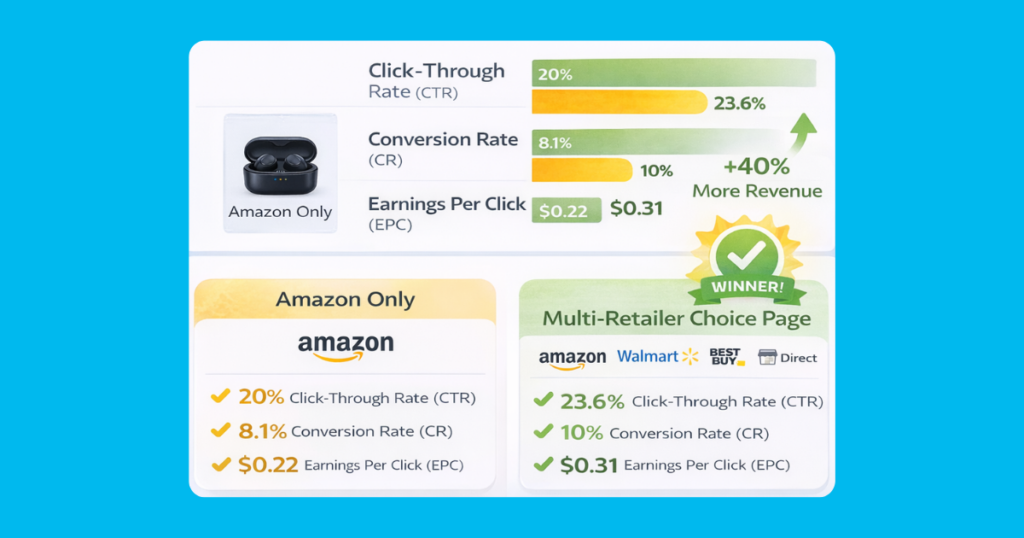
Before shifting a high-traffic link from one destination to another, use Geniuslink’s A/B split testing to run both destinations simultaneously. Split traffic at whatever ratio you choose, track EPC for each variant, and let performance data determine the winner before fully committing the change. This is especially important for your top-earning pages, where an untested switch carries the most revenue risk.
Document what you are testing and why in the Notes field on each link. When you review performance next month, you will have context for what changed and a basis for applying the learning to similar links across your library.
Tag Winners and Build Your Content Roadmap
Use Geniuslink’s Tags to label links that are consistently outperforming by retailer, product category, geography, or content type. These tagged winners become your content roadmap signals: if links in a particular sub-niche are generating strong EPC across multiple posts, that is data supporting more content investment in that direction.
Conversely, links with consistent traffic but poor conversion are signals worth investigating. Are they pointing to the wrong product for your audience? Is there a retailer mismatch? Is the product category itself a poor fit? Use the link-level analytics and your Notes history to diagnose the issue before deciding whether to redirect, test an alternative, or retire the link.
Retire Underperformers Quickly
One of the most practical benefits of Geniuslink’s link management tools is the ability to redirect or retire a link instantly without editing the underlying content. When a product goes out of stock, when a retailer’s commission rate drops, or when a test reveals a clearly superior destination, you update the link once in the dashboard, and the change propagates everywhere that link exists.
This means you can maintain a link library that reflects current performance data rather than historical publishing decisions. The links in your oldest content can still be pointing to your best current destinations, without any manual editing of those posts.
Building Your Content Roadmap from Analytics
After running links for 60 to 90 days in a niche, your Geniuslink analytics will tell you things about your audience that no keyword tool can. You will see which countries are sending traffic and whether those visitors are converting. You will see which devices dominate your clicks and whether mobile deep linking is configured to serve those users well. You will see which products are generating the highest EPC and which are underdelivering relative to their traffic volume.
Use that data to inform your next content decisions. High-EPC product categories with strong click volume suggest the need for more content around those products. Geographic traffic from regions where you are not yet enrolled in regional affiliate programs is a clear next step. Mobile-heavy traffic on links without deep linking configured is a quick optimization with measurable impact.
The affiliates who compound their earnings over time are the ones treating analytics as a feedback loop, not just a reporting tool. Each month of data makes the next content decision more informed, and each well-informed decision compounds forward.
Getting Started
The simplest entry point is to pick one niche from the list above, identify three to five core product categories within it, and set up a Choice Page for each using Geniuslink’s Choice Pages. Configure your affiliate IDs for Amazon and at least one additional retailer, set up geographic routing for your top international traffic countries, and begin generating click data.
After 30 days, review EPC by destination and geography. After 60 days, run your first A/B test on a high-traffic link. After 90 days, use the data to decide which sub-niches and product types deserve more content investment.
Try Geniuslink free for 14 days and start validating your niche with real click data.
Author
Author