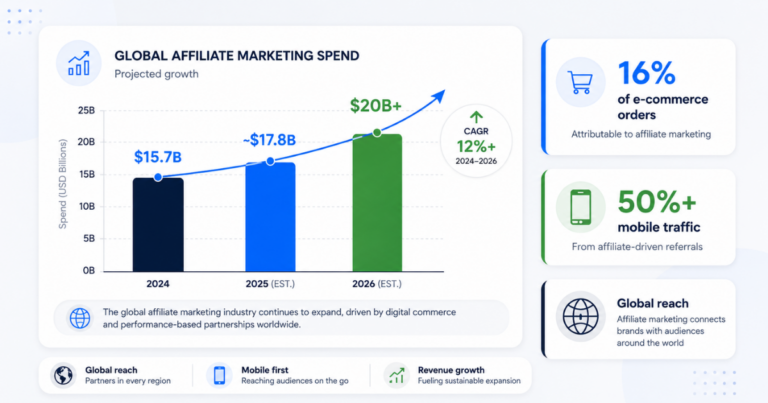

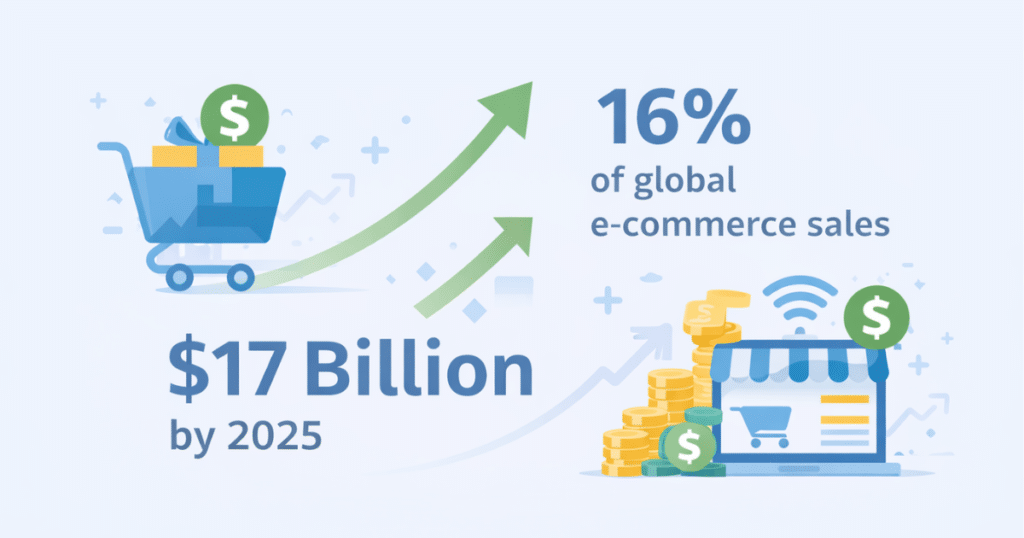
Affiliate marketing is expanding rapidly. Projected to exceed $17 billion and drive roughly 16% of global e-commerce sales, this revenue stream requires more than random link drops for bloggers, creators, and marketers. You need channel-specific tactics, robust tracking, and tools that maximize every click.
Smart affiliate link promotion isn’t about spamming your audience. It’s about matching the right strategy to the right platform while maintaining trust and compliance. In this guide, we’ll cover proven methods for each major channel and show how Geniuslink’s toolset can transform basic links into conversion machines through localization, automation, and advanced tracking.
Affiliate Marketing Fundamentals You Can’t Ignore
Before diving into tactics, let’s establish the foundation. Affiliate marketing works by earning commissions when you promote other companies’ products through tracked links. When someone clicks your link and makes a purchase within the cookie window (typically 24 hours to 30 days), you earn a percentage of that sale.
Key concepts every affiliate marketer must understand:
- Cookie windows: The timeframe during which you’ll receive credit for a sale after someone clicks your link
- Commission rates: Vary widely by program and product category (Amazon ranges from 1-10%, while digital products can offer 30-50%)
- Attribution: Usually, “last click wins,” the most recent affiliate link clicked gets the commission
- Localization: International traffic needs links that work in their country’s store
The biggest mistake new affiliates make? Treating all channels the same. What works for blog posts fails on Instagram, and email strategies don’t translate to YouTube. Let’s fix that.
Channel-Specific Strategies
Blogging & Content Marketing
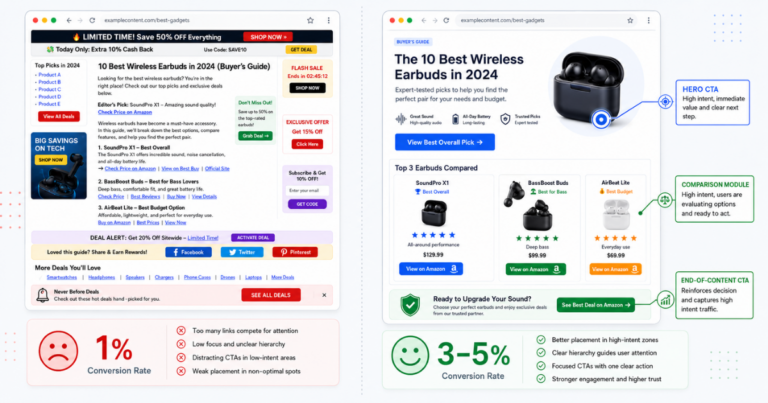
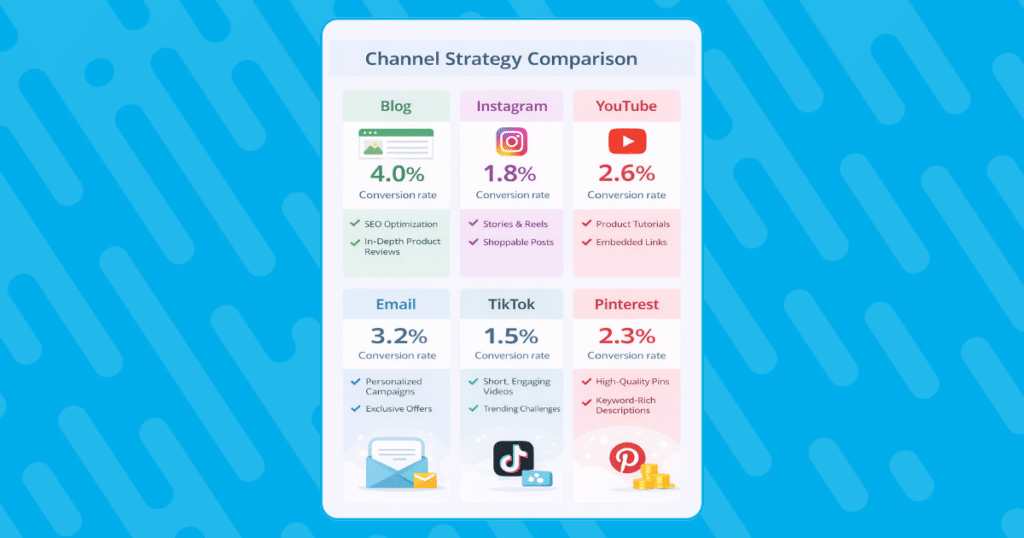
Blog posts and long-form content remain the backbone of affiliate marketing, with product reviews and tutorials driving the highest conversions. Why? Readers actively searching for buying advice trust in-depth, helpful content.
Best practices for blog affiliate promotion:
- Write detailed product comparisons that genuinely help readers choose. Include pros, cons, and specific use cases
- Optimize for search engine optimization (SEO) by targeting buyer-intent keywords like “best [product] for [use case]” or “[product] review.”
- Place disclosure statements prominently at the beginning of posts: “As an Amazon Associate, I earn from qualifying purchases.”
- Use contextual links naturally within your content rather than stuffing them everywhere
- Create resource pages listing your recommended tools by category
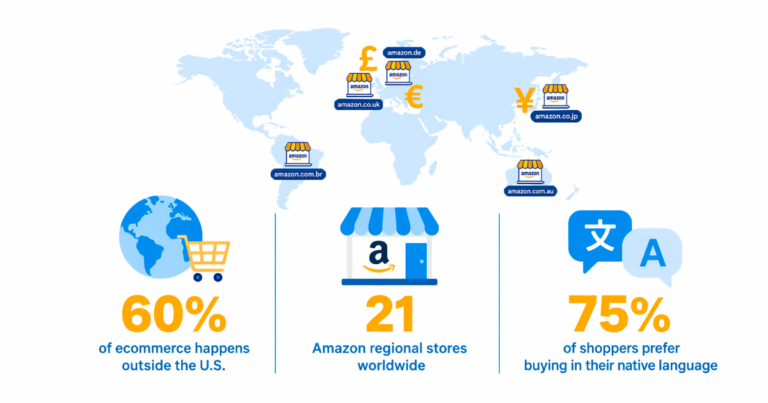
Geniuslink supercharges blog affiliate links through automatic localization. When international readers click your link, they’re sent to their local Amazon store (or other retailer) with correct currency and shipping options. This single feature can double your international conversion rates.
For WordPress users, the Amazon Link Engine plugin automatically converts all existing Amazon links on your site into smart Geniuslink uniform resource locators (URLs). No manual editing required, just install, configure your affiliate identification numbers (IDs), and watch your global earnings grow.
Social Media Platforms
Social media requires a different approach. Users scroll quickly and make impulse decisions, so your affiliate strategy must adapt. Recent data shows micro-influencer campaigns convert at higher rates when done right.
Platform-specific tactics:
- Instagram: Use Stories for time-sensitive deals, link stickers for easy clicks, and always include #ad or “affiliate link” in captions
- TikTok: Create authentic product demos, use trending sounds, and place your link prominently in bio with a clear call to action (CTA) in videos
- Twitter/X: Share genuine recommendations with context, use thread format for detailed reviews
- Pinterest: Create product collages and buying guides, optimize pin descriptions for search
Quality beats quantity on social media. Experts recommend sharing occasional high-value recommendations that genuinely help your audience rather than constantly posting links. The Geniuslink Chrome Extension makes this easy by creating trackable short links instantly while you browse products.
Email Newsletters
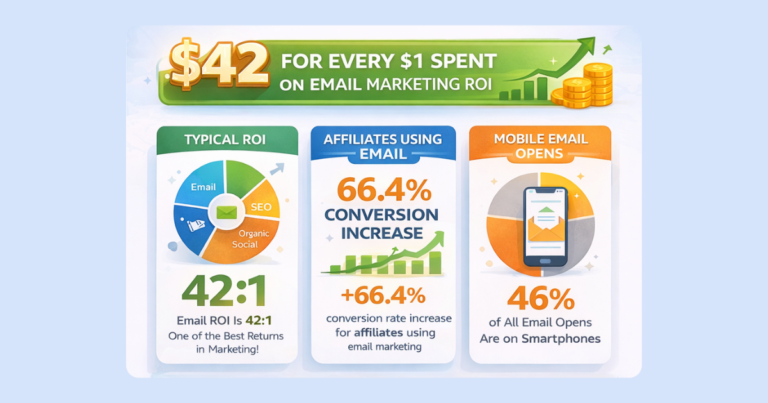
Email drives some of the highest affiliate conversion rates, averaging 6.5% compared to the typical 2-3%. Why? Newsletter subscribers already trust you and actively choose to receive your recommendations.
Email affiliate best practices:
- Segment your list to match products with subscriber interests
- Tell stories about how products solved your problems
- Include clear value propositions: what’s in it for them?
- Place disclosures clearly in your email template
- Use dedicated tracking tags for each campaign
With Geniuslink, append tracking parameters like ?track=newsletter to measure exactly which emails drive clicks and conversions. The dashboard then shows performance by campaign, letting you optimize future sends based on data.
Video & YouTube
Video content creates powerful connections with viewers, making it ideal for affiliate marketing. YouTube alone drives billions in affiliate revenue annually.
Video affiliate optimization:
- Mention products naturally within your content, not as obvious ads
- Place links in descriptions with clear labels like “Products mentioned:”
- Use timestamps to link specific products to video moments
- Create dedicated “favorites” or “what I use” videos
- Pin affiliate disclosure comments for transparency
Geniuslink offers a free YouTube Optimizer tool that scans your entire channel and automatically localizes all Amazon links in your descriptions. For channels with hundreds of videos, this can instantly boost international commissions without hours of manual editing.
Podcast & Audio Channels
Audio content presents unique challenges since listeners can’t click links while listening. Smart podcasters work around this limitation.
Podcast affiliate strategies:
- Create memorable verbal CTAs like “visit [yoursite]/resources for all mentioned products.”
- Include links in show notes with timestamps
- Build dedicated landing pages for each episode’s recommendations
- Mention disclosures verbally when discussing affiliate products
- Create a QR in Geniuslink that links to all your socials and product recommendations
Geniuslink Toolset Overview
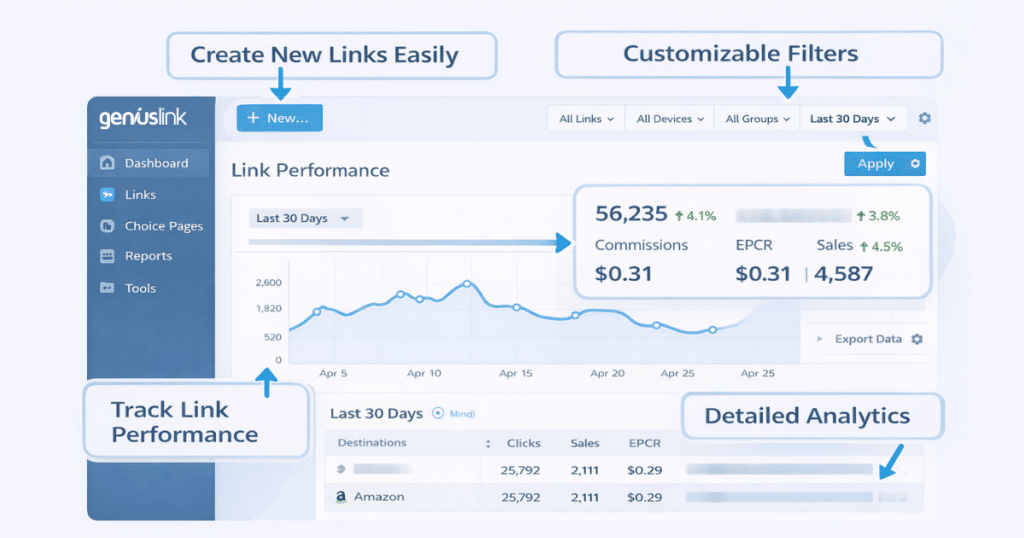
Geniuslink transforms basic affiliate links into intelligent, globally optimized conversion tools. Here’s what makes it essential for serious affiliate marketers:
- Automatic localization: Routes international clicks to the correct local store (supports 21 Amazon stores plus other retailers)
- Link health monitoring: Alerts you to broken links or discontinued products before you lose commissions
- Advanced reporting: See exactly where clicks come from and where they go, down to device and location
- A/B testing: Split traffic between destinations to find what converts best
- Groups & overrides: Organize links by campaign and apply different affiliate IDs automatically
- Mobile deep linking: Send mobile users directly into apps for higher conversion rates
- QR Codes:
But the real game-changer? Choice Pages.
Step-by-Step Implementation Workflow
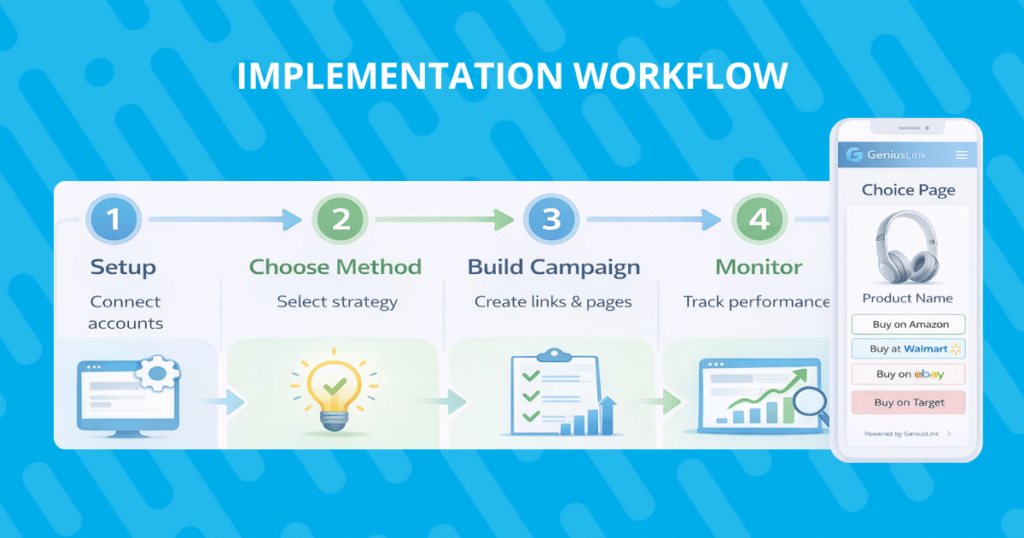
Ready to implement these strategies? Here’s your roadmap to get started with Geniuslink:
1. Set up your Geniuslink account and dashboard
- Add your affiliate IDs for each program and country
- Create Groups for different channels (Blog, Email, Social, etc.)
- Configure default settings and link formats
2. Choose your link creation method
- Dashboard: For planned campaigns and bulk link creation
- Chrome Extension: For quick social posts and spontaneous recommendations
- WordPress Plugin/JavaScript (JS): For automatic site-wide optimization
3. Build your first campaign
- Create links with descriptive aliases (geni.us/bestlaptop)
- Add tracking tags for attribution (?track=campaign-name)
- Test links across devices and locations
4. Monitor and optimize
- Check link health weekly
- Review performance by Group and campaign
- Run A/B tests on high-traffic links
Tracking, Analytics & Optimization
You can’t improve what you don’t measure. Geniuslink provides comprehensive analytics, but combining it with other tracking multiplies your insights.
Essential tracking setup:
- Urchin Tracking Module (UTM) parameters: Add source, medium, and campaign tags to track in Google Analytics
- Geniuslink tracking tags: Use the ?track= parameter for granular campaign attribution
- Conversion pixels: Place Facebook or Google pixels to close the attribution loop
- Custom campaigns: Create unique tracking for each promotion or creative
For example, a Black Friday email campaign link might look like: geni.us/laptop?track=bf-email&utm_source=newsletter&utm_campaign=black-friday
This gives you visibility in both Geniuslink and Google Analytics, so you can see exactly which campaigns drive revenue.
Compliance & Legal Requirements
Affiliate marketing operates under strict rules. Violating them can get you banned from programs or face Federal Trade Commission (FTC) fines. Here’s your compliance checklist:
FTC disclosure requirements:
- Place clear disclosures before affiliate links
- Use plain language like “I earn commissions from purchases.”
- Make disclosures conspicuous, not hidden in footers
Amazon Associates Best Practice:
- Only use link shorteners that are Amazon Safe like Geniuslink
- Don’t incentivize clicks or use pop-ups
- Respect trademark restrictions when producing content or if you’re using paid ads
- Build trust with your audience by being accurate on pricing
- Re-engage your audience with regularly updated content
General Data Protection Regulation (GDPR) and privacy:
- If you’re using websites, ensure you disclose tracking and cookies in your privacy policy
- Respect user consent for data collection via websites and newsletters
- Use appropriate affiliate IDs for each geographic region
Advanced Tactics: Choice Pages, Automation & A/B Testing
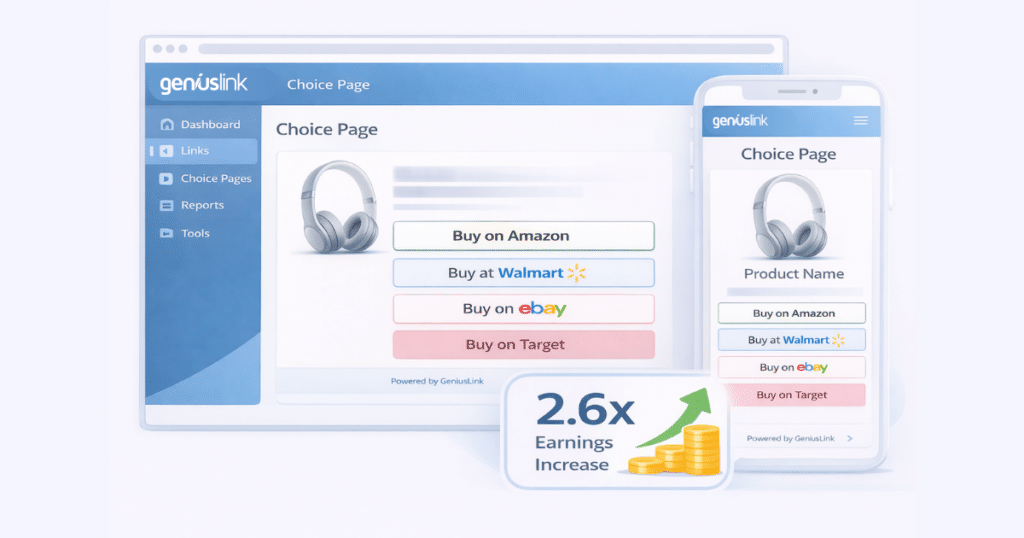
Here’s where Geniuslink truly shines. Geniuslink Choice Pages solve a critical problem; consumers searching for retailers without you receiving credit. Our studies show that with Choice Pages, earnings going up!
Choice Pages present multiple retailer options on one optimized landing page. If Amazon is out of stock, shoppers can choose Walmart or eBay, both of which are tagged with your affiliate IDs. In testing, Choice Pages increased earnings by an average of 2.6× compared to single-retailer links.
Additional advanced tactics:
- Auto-affiliation: Use JavaScript snippets to convert all product links site-wide automatically
- A/B testing: Split traffic between different products or retailers to find top converters
- Application Programming Interface (API) integration: For high-volume sites, automate link creation and management
- Group overrides: Apply different affiliate IDs based on traffic source automatically
Fixing Common Mistakes
By avoiding these common mistakes, you can protect your affiliate income.
- Quality over quantity: Post quality links, not the quantity of links
- Missing disclosures: Always err on the side of over-disclosure
- Ignoring international traffic: Up to 40% of clicks might be international, don’t waste them
- Not tracking performance: Flying blind means missing optimization opportunities
- Using raw affiliate links: They’re unappealing, the long string looks untrustworthy, and cannot be edited after publishing
Conclusion & Next Steps
Effective affiliate link promotion combines the right channel strategy with powerful tools. By matching tactics to platforms and leveraging Geniuslink’s localization, tracking, and optimization features, you transform basic affiliate links into a sustainable revenue engine.
Start with one channel, implement proper tracking, and scale based on data. Whether you’re monetizing a blog, growing a YouTube channel, or building an email empire, these strategies and tools give you the framework for long-term affiliate success.
Remember: focus on helping your audience first. When you recommend products that genuinely solve problems, conversions follow naturally.
Thank you for your support! As an Amazon Associate, we earn on qualifying purchases. Link commissions help support this site and allow us to continue providing valuable content.
Start optimizing your affiliate strategy today.
Frequently Asked Questions (FAQ): Quick Answers to Reader Questions
Q: Do I need separate affiliate accounts for each country?
A: Yes, in order to earn commission from international sales, you will need to have signed up for the Amazon Associates program for that country. Geniuslink manages this complexity by storing all your international affiliate IDs and automatically routing traffic. Check out our sign up guide for a walk through!
Q: How many affiliate links should I include per blog post?
A: Quality over quantity. Include links naturally where they add value, typically 3-7 per 1,000 words works well without appearing spammy. The specific type of content will also affect the number of links that your reader wants. For product comparisons, gear guides and daily it may make sense to use more.
Q: Can I use Geniuslink with programs besides Amazon?
A: Absolutely. Geniuslink works with iTunes, Microsoft, Target and supports custom redirects for any affiliate program.
Q: What’s the best disclosure text for social media?
A: Keep it simple: “Affiliate link” or “#ad” works for most platforms. For longer content, use “I may earn from qualifying purchases.”
Q: How long should I wait before changing underperforming links?
A: Give links at least 1,000 clicks or 30 days before making changes. Small sample sizes can be misleading.
Author
Author