

Why Most Amazon Affiliates Hit a Revenue Ceiling
Look at your Amazon Associates dashboard. See that monthly payout that barely budges? You’re not alone. Most affiliates plateau because they’re stuck in the single-store, single-device, single-program trap, and many only make a few hundred dollars per month.
The default Amazon affiliate model (one Amazon.com link for everyone) leaves serious money on the table. International visitors bounce. Mobile users abandon carts. Higher-paying programs go untapped.
Fortunately, overcoming this limitation is straightforward; simply apply four well-established multipliers to significantly increase your earnings.. Real affiliates using this approach see 38% higher earnings per click, four times more mobile conversions, twice the overall revenue, and access to 10 times higher commission rates.
Let’s dig into exactly how to implement each multiplier and start collecting every commission you deserve.
The Hidden Revenue Gap: Why Single-Store Amazon Affiliate Links Cost You Money
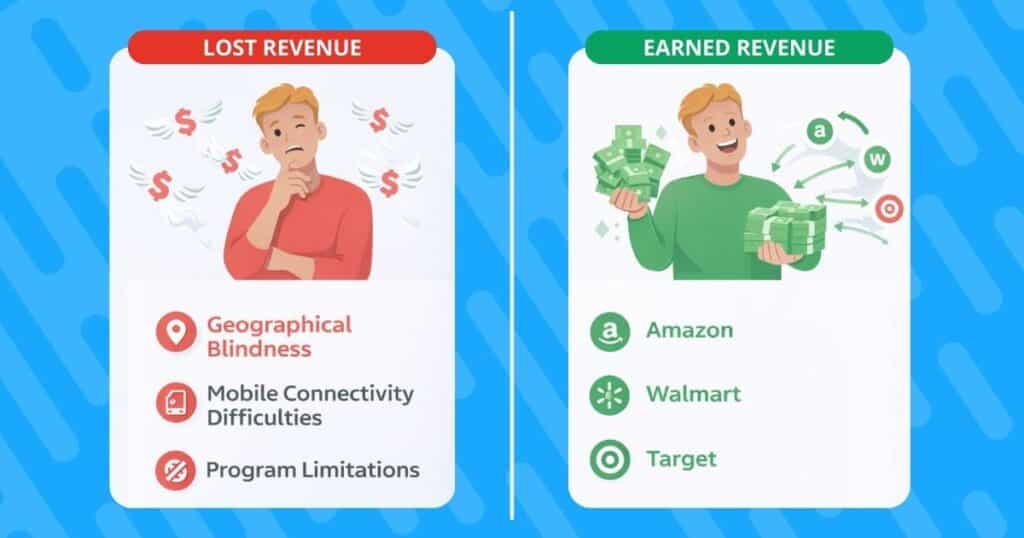
The traditional Amazon affiliate approach has three critical flaws that silently drain your earnings.
1. Geographic Blindness: Your Amazon.com links only earn U.S. commissions. When someone from the UK, Germany, or Japan clicks, they are directed to the wrong store, which displays the wrong currency and shipping options. Unsurprisingly, they often bounce without making a purchase, and you get nothing.
2. Mobile Friction: Mobile shoppers clicking your links from social media or YouTube get dumped into a logged-out browser instead of the Amazon app they use daily. The extra login steps required for them to reach the page they wanted often kill conversions.
3. Program Limitations: You’re locked into Amazon’s standard 1-10% commission tiers when many products qualify for premium rates through seller networks paying 6-10% or more.
These gaps compound. A UK visitor on mobile who clicks a product eligible for a seller network program? That’s three missed opportunities in one click. When you multiply that by thousands of clicks per month, it certainly adds up. Understanding how much traffic you need is crucial. Higher traffic directly increases your chances of generating more qualified sales and earning more commissions.
The solution isn’t working harder. It’s working smarter by implementing systems that capture every possible commission from your existing traffic.
Building Your Brand as an Amazon Affiliate Marketer
Establishing a recognizable brand is a game-changer for any affiliate marketer aiming to maximize Amazon affiliate income. Your brand is more than just a logo or color scheme. Your brand is the unique voice, style, and value you deliver through every blog post, video, or social media update. A strong brand builds trust, sets you apart from competitors, and keeps your audience coming back for more.
Start by consistently creating high-quality content that solves problems or answers questions in your niche. Use keyword research to identify what your audience is searching for and optimize your blog posts for search engines, increasing your chances of ranking in search results and attracting organic traffic. The more visible your content, the more clicks your affiliate links will receive.
Consistency is key. Develop a content calendar and stick to a regular posting schedule, whether you’re publishing in-depth reviews, how-to guides, or product roundups. Engage with your readers by responding to comments and encouraging feedback, which helps foster loyalty and credibility.
Don’t forget compliance: Always disclose your relationship with Amazon in every piece of content containing affiliate links. This transparency not only keeps you in line with Amazon’s affiliate rules but also builds trust with your audience.
By focusing on brand-building, you’ll drive more traffic to your affiliate links, increase your Amazon affiliate income, and create a sustainable affiliate business that stands out in a crowded marketplace.
Multiplier #1: Link Localization (Capture Global Commissions)
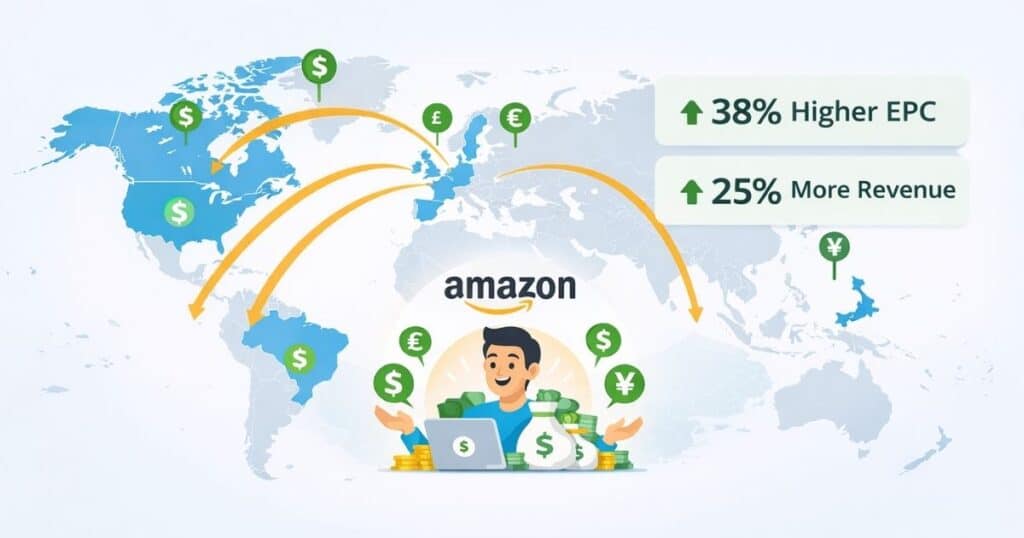
How Amazon’s 20+ Stores Fragment Your Earnings
Amazon operates over 20 country-specific stores, each with its own Associate program, commission structure, and payout requirements. Every non-U.S. click on your Amazon.com links represents lost revenue.
Consider this: A blogger with 50% international traffic is essentially losing 25% of potential commissions by using U.S.-only links. That’s not a rounding error! It’s a quarter of your income vanishing because visitors see the wrong currency, long shipping times, high shipping costs, and sometimes language they don’t understand.
How Geo-Targeting Automatically Routes Global Traffic
Geniuslink’s localization engine solves this with intelligent geo-detection. Every link automatically routes visitors to their local Amazon store while preserving your affiliate tags for that specific program.
UK visitors? They see Amazon.co.uk with pound sterling prices and local shipping. Japanese visitors? Amazon.co.jp with yen and domestic delivery options. Your commission gets tracked in each respective program.
The technology handles edge cases, too. If a specific product isn’t available in a local store, the system gracefully falls back to the best alternative, maintaining the user experience while maximizing your commission opportunity.
Case Data: 38% Higher EPC and 25% More Revenue
The numbers don’t lie. In an analysis of over 2 million clicks, enabling international localization produced:
- 38% average increase in earnings per click (EPC) (from $0.05 to $0.069)
- 5% revenue boost for every 10% of international traffic (meaning sites with 50% global visitors saw 25% total revenue increases)
- Zero extra work required. That means you have the same links, but more money.
This isn’t theoretical! Real affiliates are currently collecting these gains by properly routing their existing international traffic.
Step-by-Step Localization Setup
Step 1: Sign up for the Amazon Associates program in key countries (UK, Canada, Germany, Japan, etc.). When registering for each country’s program, you will be assigned a unique store id for tracking sales. Make sure to log into each associate account to access your dashboard and manage your affiliate links.
Step 2: Add all your international associate IDs from your various associate accounts to your Geniuslink account. This ensures that each affiliate link is properly tracked and attributed to your associate id for each country.
Step 3: Ensure your payment and tax information is accurate and up to date in each associate account. This is important to receive your earnings without delays and to comply with tax regulations.
Step 4: Create links using Geniuslink. Localization happens automatically.
Step 5: Monitor your international earnings in each Associates Central.
That’s all! Every link you create from that point forward captures commissions from all Amazon programs worldwide. There’s manual country detection, no duplicate content, and no complex redirects. Just more money from the traffic you’re already getting.
Multiplier #2: Mobile Deep Linking (4× Mobile Conversions)
The Mobile Checkout Problem
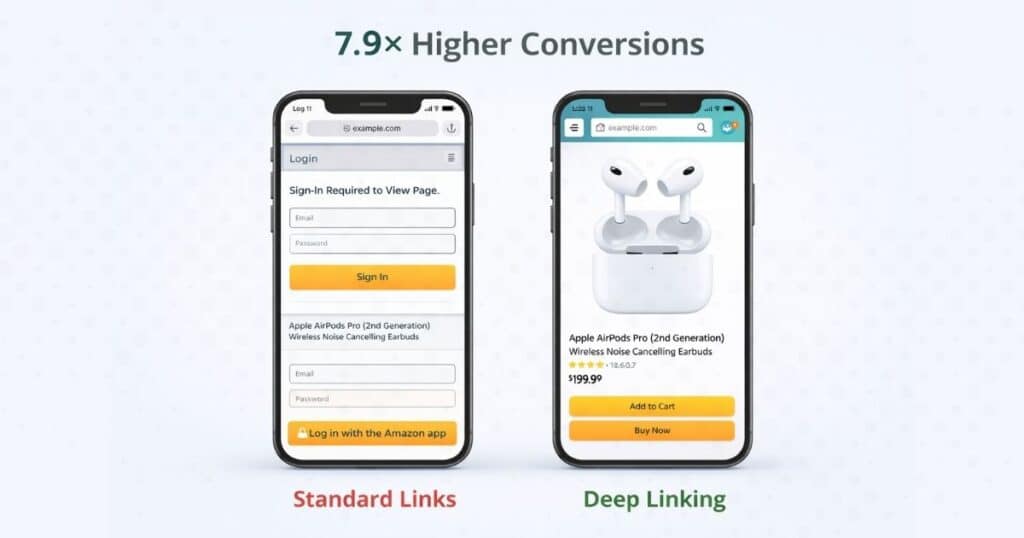
Here’s what happens when mobile users click standard Amazon links: They’re yanked from their Instagram or YouTube app into a mobile browser. They’re logged out. They face login screens, password resets, and other frustrating blockers to reaching the page they wanted.
The result? You see an increasing number of abandoned carts and lost commissions. Mobile traffic, which makes up about 50-70% of all visitors, typically converts at a much lower rate compared to desktop links. This is a valuable area to focus on, so we can discover more effective ways to engage and convert mobile users effectively.
Deep Linking vs. Standard Redirects
Mobile deep linking changes the game. Instead of opening a browser, deep links launch the Amazon app directly, where users are already logged in. As a result, most users already have saved payment methods associated with their regular shopping accounts, requiring much less work on their part in order to make a purchase.
The technology automatically detects mobile devices and equipment availability. Physical items are opened in the app for smooth purchase experiences. Digital products that cannot be purchased within the app, such as Kindle books, remain in the browser to ensure continuity of sale.
A/B Test Results: 7.9× Conversions, 4.8× Earnings
The impact of mobile deep linking is staggering:
- 7.9× higher conversion rates on mobile traffic
- 4.8× increase in mobile earnings
- 4.5× more items shipped
- 5.7× growth in shipped revenue
These are not just small upgrades; they’re powerful boosts that show how users happily tend to spend more when they’re enjoying their favorite shopping experience environment. It’s exciting to see such clear evidence of how tailored experiences can make a big difference!
Implementation Guide for iOS and Android
Setup is automatic with Geniuslink.
1. Mobile deep linking is built into every geni.us link you create.
2. All links include deep-link logic for both iOS and Android.
3. The system auto-detects device type and app availability.
4. Users get the best experience while you maximize conversions.
No SDK installation, app development, or technical complexity is involved. Every mobile click now has the highest chance of converting into a commission.
Multiplier #3: Choice Pages (2× Revenue with Options)
The Power of Retailer Choice for Shoppers
Forcing every visitor to Amazon leaves money on the table. Some shoppers prefer Walmart’s prices. Others trust Best Buy for electronics. International visitors might want local retailers.
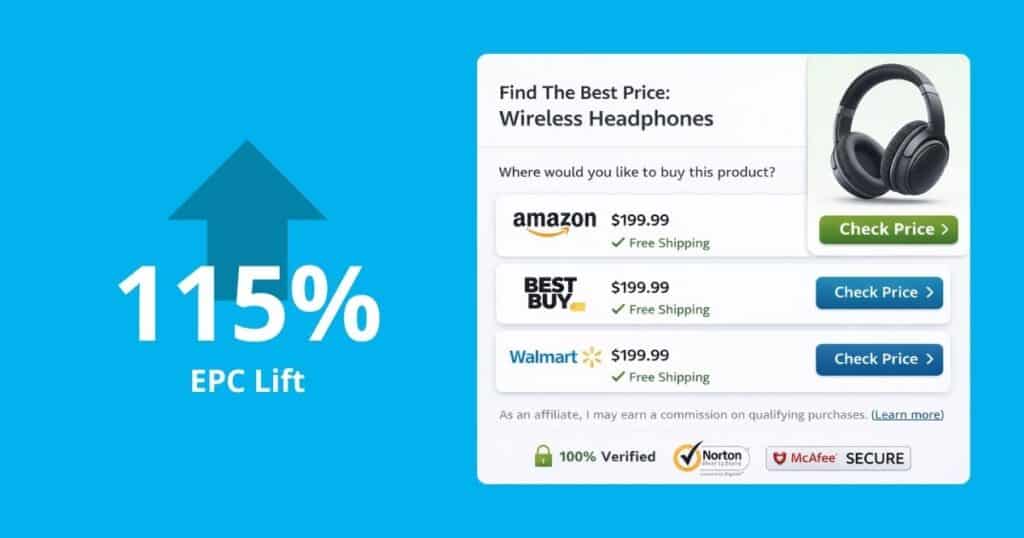
Choice Pages solve this by presenting multiple buying options on a clean landing page. One link shows Amazon alongside other retailers, each with your affiliate tag attached.
Counterintuitively, offering alternatives can actually increase Amazon sales. Shoppers feel more confident seeing options, do quick price comparisons, and frequently choose Amazon anyway, but now they’re committed buyers rather than browsers.
115% EPC Lift Case Study
In controlled A/B tests, Choice Pages dramatically outperformed direct Amazon links. Here’s just a few examples of how.
- 115% higher earnings per click compared to Amazon-only links
- Better user experience with transparent options
- Diversified revenue across multiple programs
- Higher overall conversion rates from confident shoppers
The psychology is simple: Choice reduces friction and builds trust. Shoppers appreciate transparency and reward it with purchases.
Designing High-Converting Choice Pages
Best practices for Choice Page optimization:
- Limit options: Show 3-5 retailers maximum to avoid paralysis.
- Prioritize relevance: List the most logical retailers for each product type, and select the right product category for each Choice Page to maximize earnings by targeting the most lucrative commission rates and matching shopper intent.
- Clear CTAs: Use obvious “Check Price” or “Buy Now” buttons.
- Mobile-first: Ensure pages load fast and display perfectly on phones.
- Trust signals: Include retailer logos and security badges.
Compliance and FTC Disclosures
Choice Pages help with compliance by providing a natural place for affiliate disclosures. Include clear language, such as “As an affiliate, I earn from qualifying purchases,” prominently on the page. This transparency builds trust while meeting FTC requirements.
Multiplier #4: Seller Networks (6-10% Premium Commissions)
What Are Seller Networks?
Many Amazon merchants run their own affiliate programs through networks like Levanta, Archer Affiliates, and BrandCycle. These programs often pay significantly higher commissions than Amazon’s standard rates (typically 6-10% versus Amazon’s 1-4% for most categories).
Seller networks work alongside your Amazon Associates account. When someone clicks your link, Geniuslink checks if that specific product qualifies for a higher commission through a seller program. If yes, it routes through that program. If no, it uses your standard Amazon affiliate tag.
Real Commission Examples
Actual rate comparisons:
- Electronics: Amazon pays 1-4% while seller networks pay 6-8%.
- Home goods: Amazon pays 3%, yet seller networks pay 8-10%.
- Fashion: Amazon pays 4%, but seller networks pay 6-12%
- Supplements: Amazon pays 1%, seller networks pay 10-15%.
On a $100 sale, seller networks could mean the difference between you earning $3 and $10. Just think what that totals after hundreds of transactions.
Auto-Switching Logic: Best Rate Wins
The beauty of seller network integration through Geniuslink is that it’s completely automatic. The system checks every click against available programs and routes to a higher-paying option. You don’t manage multiple links or guess which products qualify.
If a seller program becomes unavailable or a product goes out of stock, the system automatically falls back to standard Amazon commissions so you don’tlose a sale.
How to Apply and Integrate Networks
Getting started with seller networks:
1. Apply to networks: Start with Levanta and Archer Affiliates (most coverage). When applying, you may be required to provide details about your affiliate channel, such as your website, blog, or social media presence, to demonstrate your reach and audience.
2. Get approved: Usually takes 24-48 hours
3. Connect to Geniuslink: Add your network credentials once.
4. Automatic optimization: Every link now checks for premium rates.
Most affiliates see immediate revenue increases just from capturing these higher rates on existing traffic.
Creating a Community Around Your Amazon Affiliate Content
Building a thriving community around your Amazon affiliate content is one of the most effective ways to boost affiliate sales and long-term engagement. When you connect with your audience beyond one-off blog posts, you transform casual readers into loyal supporters who trust your recommendations and regularly click your affiliate links.
Start by actively engaging on social media platforms. Share your latest content, respond to comments, and join conversations in relevant groups or forums. Consider creating your own Facebook group or online community where your audience can discuss products, ask questions, and share experiences related to your niche. This not only positions you as an authority but also encourages word-of-mouth sharing, driving more traffic to your Amazon affiliate account.
Email marketing is another powerful tool for nurturing your community. Send regular newsletters with exclusive tips, product recommendations, or special promotions. This keeps your audience informed and gives you more opportunities to earn money online through affiliate sales.
Collaborate with other affiliate marketers or influencers to expand your reach and bring fresh perspectives to your content. Guest posts, joint webinars, or social media takeovers can introduce your brand to new audiences and generate additional affiliate links.
By fostering a sense of belonging and open communication, you’ll encourage your community to support your affiliate marketing efforts, share your content, and help you drive traffic and affiliate sales—all while building a sustainable source of affiliate income.
Using Email Marketing to Promote Your Amazon Affiliate Content
Email marketing remains one of the most effective ways to promote your Amazon affiliate content and drive targeted traffic to your affiliate links. By building a dedicated email list, you gain direct access to an audience already interested in your recommendations, making it easier to convert readers into buyers and increase your Amazon affiliate earnings.
Start by offering valuable content or incentives to encourage sign-ups, such as exclusive product guides or early access to reviews. Use keyword research to craft compelling subject lines and email copy that resonates with your audience and improves your open rates. Incorporate affiliate links to relevant products, using Amazon’s product linking menu to generate custom links that are easy to track.
Segment your email list based on interests or past engagement, allowing you to send highly targeted campaigns that match subscribers with the products they’re most likely to purchase. Always disclose your affiliate relationship with Amazon in every email to maintain transparency and comply with Amazon’s affiliate rules.
By leveraging email marketing, you can nurture a loyal following, drive consistent traffic to your affiliate links, and maximize your Amazon affiliate income with every campaign.
Continuous Optimization with A/B Split Routing
Why EPC Beats Click-Through Rate
Forget vanity metrics. Earnings Per Click (EPC) is the only number that matters for affiliates. It directly measures how much money each visitor generates, accounting for both conversion rate and commission amount.
A link with lower clicks but higher EPC makes more money. Period. That’s why testing different approaches and routing traffic based on EPC, not clicks or conversions alone, maximizes revenue.
Designing Valid Split Tests
Example test structure:
- Control (50% of traffic): Direct Amazon.com link
- Variant (50% of traffic): Choice Page with multiple retailers
- Measurement period: Run until 100+ clicks per variant
- Success metric: Highest EPC wins
Geniuslink’s platform randomly assigns visitors and tracks performance separately. No bias, no guesswork, just data.
Reading Dashboards and Scaling Winners
Once results are clear (typically 54-115% EPC improvements for optimized variants), shift all traffic to the winner. The platform makes this simple, just update your routing rules.
Key metrics to monitor:
- EPC by country: Some approaches work better in specific regions
- EPC by device: Mobile might prefer different options than desktop
- EPC by traffic source: Social traffic might convert differently from search
Use these insights to create even more targeted routing rules, continuously improving performance.
Auto-Affiliation: Never Miss Another Commission
Here’s an embarrassing truth; most affiliates have broken links scattered across their content. Old posts, forgotten pages, rushed publications. They all leak revenue.
Auto-affiliation eliminates this problem by ensuring every affiliate ID is correctly embedded in your links. Add your affiliate IDs once to Geniuslink, and every link automatically includes the correct tags for each program and country. No manual checking, no lost commissions.
Auto-affiliation also helps you add affiliate links to all your content, so you never miss out on potential revenue.
The system handles complex scenarios too:
- Multiple IDs: Different tags for different sites or tracking purposes
- Program compliance: Ensures proper tag format for each retailer
- Fallback logic: Uses your default ID if specific programs aren’t available
- Automatic link management: The system can automatically generate affiliate links and create affiliate links for any untagged URLs found in your content
It’s invisible to users but invaluable to your bottom line. Every qualifying click gets tracked and paid.
Avoiding Common Mistakes in Amazon Affiliate Marketing
Success in Amazon affiliate marketing isn’t just about what you do—it’s also about what you avoid. Many affiliate marketers make preventable mistakes that can limit their affiliate sales, reduce traffic, or even jeopardize their Amazon affiliate account.
One of the most critical errors is failing to disclose your affiliate relationship with Amazon. Not only does this violate Amazon’s affiliate rules, but it can also erode trust with your audience and risk account termination. Always include clear disclosures on every page and email containing affiliate links.
Another common pitfall is neglecting search engine optimization. If your content isn’t optimized for search engines, you’ll struggle to attract organic traffic and your affiliate links will go unnoticed. Use keyword research to target relevant search terms, and create high-quality, valuable content that answers your audience’s questions.
Don’t ignore the power of social media platforms and email marketing. Relying solely on one traffic source can limit your reach and conversion rates. Promote products across multiple channels, and use custom links to track performance and optimize your strategy.
Finally, regularly monitor your affiliate sales, conversion rates, and click-through rates. Without tracking, you can’t identify what’s working or where to improve. Stay up to date with Amazon’s policies and best practices, and always promote products that genuinely fit your niche and audience.
By steering clear of these common mistakes, you’ll build a more resilient affiliate marketing business, drive more traffic to your affiliate links, and maximize your potential for earning passive income as a successful affiliate marketer.
Implementation Checklist: Your 30-Minute Quick Start
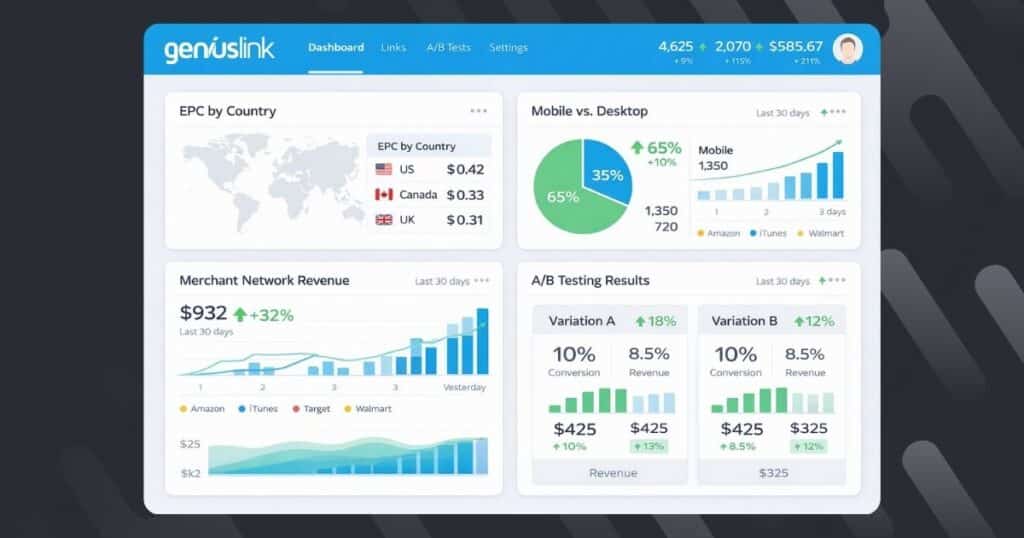
Ready to multiply your earnings? Here’s your action plan:
☐ Create GeniusLink account and add all Amazon Associate IDs (5 minutes)
☐ Convert your top 10 money pages to Choice Pages (10 minutes)
☐ Apply to Levanta and Archer Affiliates (5 minutes)
☐ Launch first A/B test: direct link vs Choice Page (3 minutes)
☐ Set up direct deposit and provide your bank account information in each Amazon Associate account to ensure timely and secure payments (4 minutes)
☐ Schedule monthly EPC review in your calendar (3 minutes)
Total time: 30 minutes to potentially double your Amazon affiliate income.
Frequently Asked Questions
Does Localization Violate Amazon TOS?
No. In fact, Amazon explicitly allows and encourages affiliates to join multiple country programs. Geniuslink simply automates the routing process, ensuring compliance with each program’s specific requirements. You’re using official affiliate links for each store, just intelligently.
Will Choice Pages Cannibalize Amazon Sales?
The opposite happens. Testing consistently shows Choice Pages increase total revenue, including Amazon earnings. Shoppers who see options feel more confident in their purchase decision. Many still choose Amazon, but now as informed buyers rather than hesitant browsers.
How Long to See Results?
Immediate for some multipliers, gradual for others:
- Localization: Next international click starts redirecting
- Mobile Deep Linking: Instant impact on mobile traffic
- Choice Pages: Results visible within 24-48 hours
- Seller Networks: As soon as approval completes (1-2 days)
Most affiliates see meaningful revenue increases within their first full.month.
What About EU GDPR Compliance?
Geniuslink is GDPR compliant and processes data in accordance with EU regulations. The platform doesn’t store personally identifiable information from clicks, and all geo-detection happens via anonymous IP lookup. Your affiliate business remains compliant while maximizing international earnings.
Tools and Resources
Everything you need to implement these multipliers:
- GeniusLink: The link management platform powering all four multipliers and helping you create, track, and optimize your Amazon affiliate links for maximum earnings
- Amazon Associates Central – Official program hub and compliance guidelines; access the Associates Central dashboard here, your main hub for managing your Amazon affiliate links and generating each Amazon affiliate link
- Levanta – Leading Amazon seller network for premium commissions
- Archer Affiliates – Alternative seller network with strong merchant coverage
Additional resources for optimization:
- EPC Calculator: Track your earnings per click improvements
- A/B Test Planner: Structure valid experiments
- Commission Tracker: Monitor earnings across all programs
Next Steps: Stop Leaving Money on the Table
You’ve seen the data. Localization adds 25-38% more revenue. Mobile deep linking multiplies conversions by 4-8×. Choice Pages double earnings per click. Seller networks pay up to 10 times the standard rates.
To make money as Amazon’s affiliate, focus on creating content that leverages content marketing strategies and promotes affiliate products through in content links. Use multiple platforms like a blog and YouTube channel, social media accounts, and even mobile apps to maximize reach. Drive direct traffic with paid advertising and paid ads, and engage with Facebook groups to build community and trust. Remember to become an Amazon affiliate, meet the qualified sales threshold, and consider joining other affiliate programs to diversify your Amazon revenue streams. Making money with the Amazon affiliate program requires a strategic approach to content creation, link placement, and platform diversification.
These aren’t incremental improvements. They’re transformative multipliers that compound when used together. The same traffic you’re getting today could generate 2-4× more revenue by implementing these systems.
The question isn’t whether these strategies work. The data proves they do. The question is whether you’ll take 30 minutes today to implement them, or continue leaving money on the table with every click.